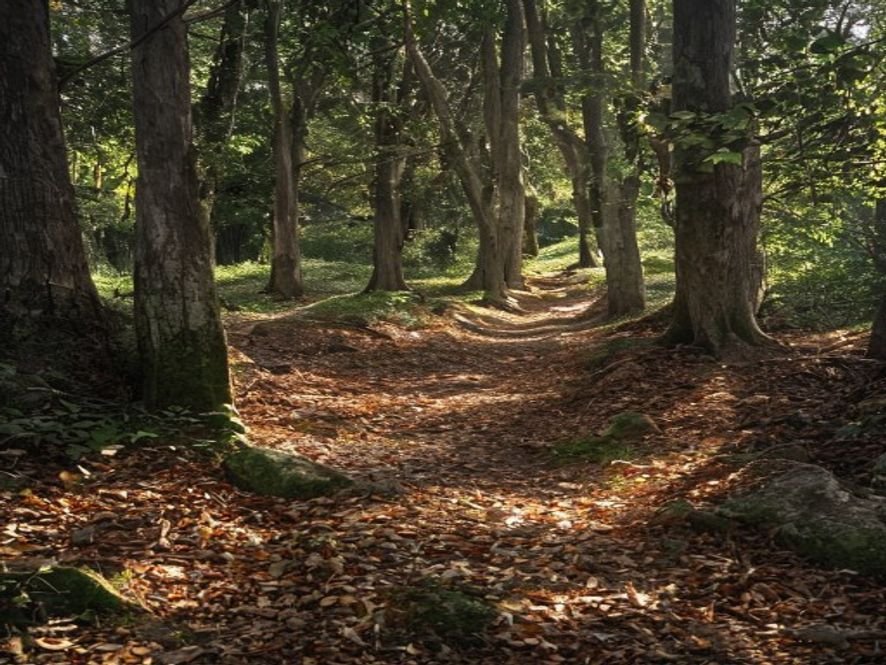
North Portugal is one of the most botanically rich regions of Western Europe. The combination of Atlantic rainfall, granite and schist geology, altitude variation, and relatively low intensity land use has preserved a herbaceous flora that is genuinely extraordinary — and largely unknown to international visitors.
This is a practical seasonal guide to the wild edible and medicinal plants you'll encounter in Norte, organised by the time of year you're most likely to find them at their best.
## Late Winter / Early Spring (February – March)
**Dandelion (Taraxacum officinale) — Dente-de-leão** The first reliable green. Young leaves are exceptional as a bitter salad green — far more interesting than anything you can buy in a supermarket. Harvest before the flower opens. Roots can be roasted as a coffee substitute. Flowers make a simple syrup. Every part of this plant is useful.
**Chickweed (Stellaria media) — Morugem** A constant presence in any disturbed ground and kitchen garden. Mild, tender, with a slightly sweet flavour. Excellent raw in salads or as a sandwich green. Short harvest window — it bolts and becomes stringy quickly.
**Nettles (Urtica dioica) — Ortiga** Young nettles in February and March are as nutritious as spinach and much more flavourful. Blanched or cooked, the sting disappears entirely. Classic applications: nettle soup, nettle pesto, nettle tea. Use gloves. That's the only caveat.
## Spring (April – May)
**Elder flowers (Sambucus nigra) — Sabugueiro** One of the most transformative foraging finds. Elder is abundant throughout Norte at hedgerow edges, forest margins, and roadsides. The cream-coloured flower heads, harvested before fully open, make extraordinary cordial (the floral complexity is unlike anything commercial), fritters, and wine.
**Plantain (Plantago lanceolata) — Tanchagem** Not the banana relative — the broad-leaved common plantain. One of the most useful medicinal plants in the European tradition. Anti-inflammatory, wound-healing, expectorant. Young leaves can be eaten raw; older leaves are tougher but still usable cooked. A standard ingredient in traditional Portuguese home medicine.
**Wild garlic (Allium ursinum) — Alho bravo** Where it grows (typically in damp, shaded woodland near watercourses), wild garlic is abundant and aromatic. Leaves, flowers, and bulbs are all edible. Best raw as a pesto base, wilted as a side vegetable, or chopped into butter. The season is short: 6–8 weeks before it disappears completely.
## Summer (June – August)
**St John's Wort (Hypericum perforatum) — Hipericão** Abundant on the rocky slopes and rough grassland of Norte, flowering from June through August. Historically one of the most important medicinal plants in the European tradition. The oil infusion (flowers in olive oil for 4–6 weeks in sunlight) produces the classic red hypericum oil used for nerve pain, bruising, and wound healing. The tea is widely used for mild depression, anxiety, and sleep support.
**Yarrow (Achillea millefolium) — Mil-folhas** Common throughout Norte in meadows and roadsides. Strong, aromatic, versatile. Used as a digestive bitter, wound-staunching herb, and fever-reducing tea. The feathery leaves and flat white flower heads are distinctive. Makes a pleasant tea blended with lemon verbena.
**Lemon verbena (Aloysia citrodora) — Limonete or Erva-luísa** Technically from South America but thoroughly naturalised in Portugal, where it grows as a woody perennial in most gardens and is the most-consumed herbal tea in the country. Fresh leaves make the finest cold infusion in any herbal tradition I'm aware of — pure citrus-lemon, absolutely clean, deeply refreshing.
## Autumn (September – November)
**Wild mushrooms** — this deserves its own article (and gets one). The brief note: North Portugal is rich in Boletus edulis (porcini), chanterelles (Cantharellus cibarius), and saffron milk caps (Lactarius deliciosus), among many others. Autumn foraging walks are a key programme element of our retreat.
**Hawthorn berries (Crataegus monogyna) — Pilriteiro** The hedgerows turn red with haws from late September. Not particularly flavourful raw, but excellent cooked — hawthorn berry ketchup and fruit leather are classic preparations. Deeply nutritive for the cardiovascular system in traditional medicine.
---
*We run guided herb walks as part of our retreat programme, led by a local ethnobotanist. Details on our programme page.*