The word "retreat" has been borrowed by the hospitality industry and stretched to cover everything from a two-night city spa break to a 30-day silent Vipassana. As a result, it's become almost meaningless — and the people who most need what a real retreat offers are often the ones most cynical about the term.
Let's be specific about what a retreat is, what it isn't, and how to know the difference.
## What a Retreat Is Not
A retreat is not a holiday with yoga classes.
That sounds harsh, but the distinction matters. A hotel that adds a morning yoga session and calls the package a "wellness retreat" is doing its guests a disservice. The yoga might be excellent. The experience might be thoroughly enjoyable. But neither of those things is what a retreat is for.
A retreat is also not a spa holiday. Massages, facials, hot tubs, and cucumber water are lovely. They have their place. But sensory comfort is not the same as the deep rest and reset that a genuine retreat creates.
A retreat is not group therapy, even when it involves sharing circles, facilitated emotional work, or somatic practices. These can be powerful elements within a retreat container. They are not the container itself.
## What a Retreat Actually Does
A retreat creates the conditions for something that daily life prevents: genuine decompression.
Most people in modern, connected, achievement-oriented lives are operating at a sustained level of nervous system activation that they've come to experience as normal. It isn't normal. It's a response pattern. And it doesn't switch off just because you've arrived at a beautiful place and had a good night's sleep.
The decompression process — the actual physiological downregulation of the stress response — takes time and the right conditions. Research on cortisol reduction in natural environments suggests that meaningful effects require sustained exposure of at least 2–3 days, with increasing benefits over 5–7 days.
A well-designed retreat: - Removes digital stimulation (not as a rule, as a relief) - Structures time so decisions don't have to be made constantly - Uses the natural environment as an active therapeutic agent - Creates enough community to feel held, enough solitude to feel free - Provides physical rhythm: movement, rest, food, sleep, repeat
## The Land Matters
One of the most underestimated elements of a retreat is the land itself. Not as backdrop, but as participant.
Nature is not a passive setting. Research in environmental psychology (particularly the work of Kaplan and Kaplan on Attention Restoration Theory) shows that natural environments — particularly those with water, trees, and natural sound — actively restore directed attention and reduce mental fatigue. This is not metaphorical. It's neurological.
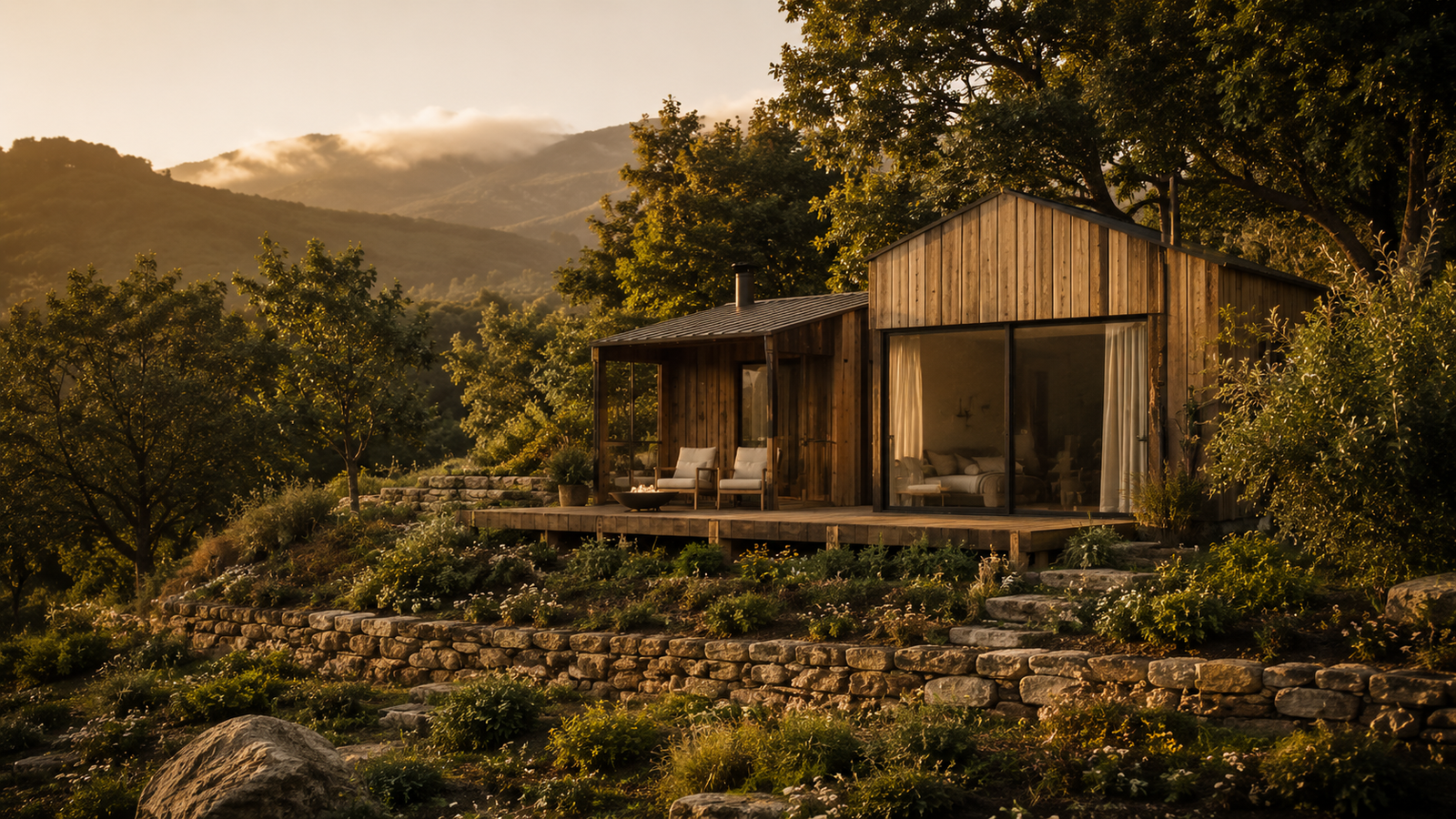
When we designed this retreat, we didn't start with the programme and then find land to put it on. We started with land that would do most of the therapeutic work by itself. The biological pond, the forest, the orchard, the sound of water — these are the retreat. The programme is the structure around them.
## How to Choose a Retreat Wisely
When you're evaluating a retreat:
**Ask about the land first.** Where is it? What does it look like? Is there nature — actual, unmanaged nature — or is it a manicured garden?
**Ask about the ratio of structured to unstructured time.** Good retreats have significant unscheduled time. If every hour is accounted for, you're looking at a course, not a retreat.
**Ask what "digital detox" means.** Does the location have no signal, or are you just politely asked not to check email?
**Read guest reviews with specific eyes.** Look for language about sleep quality, emotional shifts, or specific moments that surprised guests. Generic "it was amazing" reviews tell you nothing.
**Ask about facilitator qualifications and insurance.** Any retreat running yoga, movement, or therapeutic practices should be using qualified, insured practitioners.
---
*We designed this retreat around one question: what would the land need to do to make humans genuinely well? Our answer is our programme.*