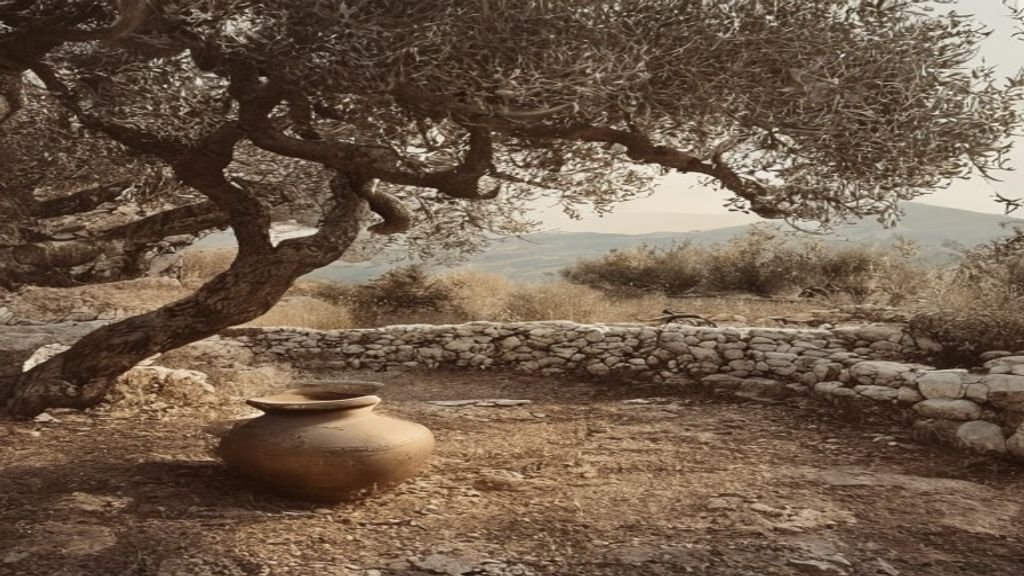
We spent a month choosing the trees before we ordered a single one. A month of spreadsheets, nursery catalogues, forum threads in Portuguese we translated poorly, and conversations with a retired agronomist who lives three villages over and was patient with our questions in a way that suggested he had met optimistic foreigners before.
The site is at roughly 700 metres altitude in Norte Portugal. The soil is granitic and acid — pH between 5.2 and 5.8 across the planting area, which we tested properly before doing anything else. Winters are wet and occasionally hard: we recorded -8°C in January of our first year. Summers are dry; July and August bring essentially no rain and temperatures regularly above 30°C. The combination matters enormously for variety selection, and it rules out a significant portion of what looks attractive in a general orchard catalogue.
## The Selection Process
We were aiming for a mixed orchard that would produce across as long a season as possible and function as habitat as well as food. The final list of 50 trees:
- **12 apple trees** — four varieties: Maçã Riscadinha (a regional variety, early, good in acid soil), Bravo de Esmolfe (the benchmark Portuguese apple, mid-season), Golden Delicious as a pollinator, and one Cox's Orange Pippin on a provisional basis, knowing it was borderline for our altitude - **8 pear trees** — Rocha and Williams, both reliable in Norte; two Beurré Hardy for the colder corner of the site - **6 plum trees** — Rainha Cláudia Verde (the Portuguese greengage, extraordinary if you've had it ripe off the tree) and two Mirabelles, which handle dry summer conditions well - **6 quince** — *Cydonia oblonga*, one of the most forgiving and under-appreciated orchard trees in this climate - **4 fig trees** — *Ficus carica*, specifically Pingo de Mel and Dauphine - **6 sweet chestnut** (*Castanea sativa*) — technically already in the food forest area, but counted here for planting logistics - **4 walnut** (*Juglans regia*) - **4 medlar** (*Mespilus germanica*) — reliable, ignored, and good - The final 10 were a mix of cherry (*Prunus avium*, two varieties for cross-pollination), loquat (*Eriobotrya japonica*), and two persimmon (*Diospyros kaki*)
Varieties came from two sources: a local nursery near Ponte de Lima that stocks regional fruit varieties and was recommended to us by our neighbour, and an online specialist in traditional Portuguese varieties (Viveiros Caminho das Árvores) that ships bare roots in November and December. We ordered from both deliberately — we wanted to compare establishment rates.
## Arrival Day
The bare roots arrived on the 14th of November, packaged in damp sawdust and black plastic sheeting. We had been warned to have the planting holes ready before they arrived and to get them in the ground within 48 to 72 hours if possible.
There is something specific about the smell of bare-root trees — earthy, faintly fungal, mineral. The roots are exposed and you can see exactly what you're working with: the fibrous mass of fine roots that will either take hold in your soil or not. We laid all 50 out in the barn on a tarpaulin and sorted them by species before starting.
The local nursery trees were heavier, better branched, and had visibly more developed root systems. The online specialist trees were thinner and more variable — a few were excellent, several were mediocre. For bare-root stock in this climate, we'd now recommend sourcing as locally as possible.
## Planting Logistics
Two people, four days, a post-hole digger borrowed from a neighbour with a tractor. This was the correct decision. Digging 50 holes by hand in granitic soil is possible but deeply unreasonable. The tractor auger took approximately 15 minutes per hole, including repositioning. We followed each machine hole with hand work — loosening the sides, improving drainage, adding a mix of compost (home-made, from two years of accumulation) and lime to raise the pH slightly around each root zone.
We did not amend the soil with purchased fertiliser. In retrospect, this was a mistake for approximately a third of the trees, which were going into particularly poor, shallow soil on the upper slope. We were over-reliant on "the trees will adapt."
## The First Spring: Eighteen Gaps
May arrived. We walked the orchard and counted. Thirty-two trees had leafed out cleanly or were showing bud break. Eighteen showed nothing.
We waited another three weeks, because bare-root trees can be slow, and because we had read somewhere that latent bud break occasionally happens into June. Three of the eighteen eventually produced weak growth. Fifteen were dead.
The pattern of failures was not random. The upper slope, where the soil was shallowest and most acid (below pH 5.0 in places we hadn't tested individually), had a failure rate of around 60%. The lower slope, where the soil was deeper and moister, had a failure rate of under 10%. The Cox's Orange Pippin died. We were not surprised. Two of the Maçã Riscadinha on the upper slope also died, which we had not expected.
We replanted the following autumn with a more targeted soil amendment strategy and, critically, added lime to the upper slope planting holes.
## The Second Spring: Recovery
Forty-two of the surviving and replanted trees leafed out in the second spring. The replanted upper slope trees were behind the lower slope by about three weeks in development but alive and growing. The quince were, predictably, the most robust — not one quince has given us any trouble at any point.
The orchard doesn't look like an orchard yet. It looks like a field with a lot of small stakes in it. Establishing trees at altitude with dry summers requires patience measured in years, not months.
## What No Book Told Us Clearly
That establishment failure is heavily site-specific within a single field, not just climate-specific. That pH variation across 50 metres of slope can be the difference between success and failure. That bare-root stock quality varies enormously even within the same species and variety from different nurseries. And that planting to a map is different from planting to a landscape: the soil tells you things after the fact that it won't tell you before.
The orchard is now in its third year. We expect the first meaningful fruit harvest — quince, fig, and a few of the more advanced plums — in year four. The apples won't be worth picking until year five at the earliest. We knew this when we planted. The orchard is not for us right now. It's for the guests who will sit under these trees in ten years.
---
*We track the orchard season by season on this blog — follow along if you're considering something similar, or come and see it in person.*