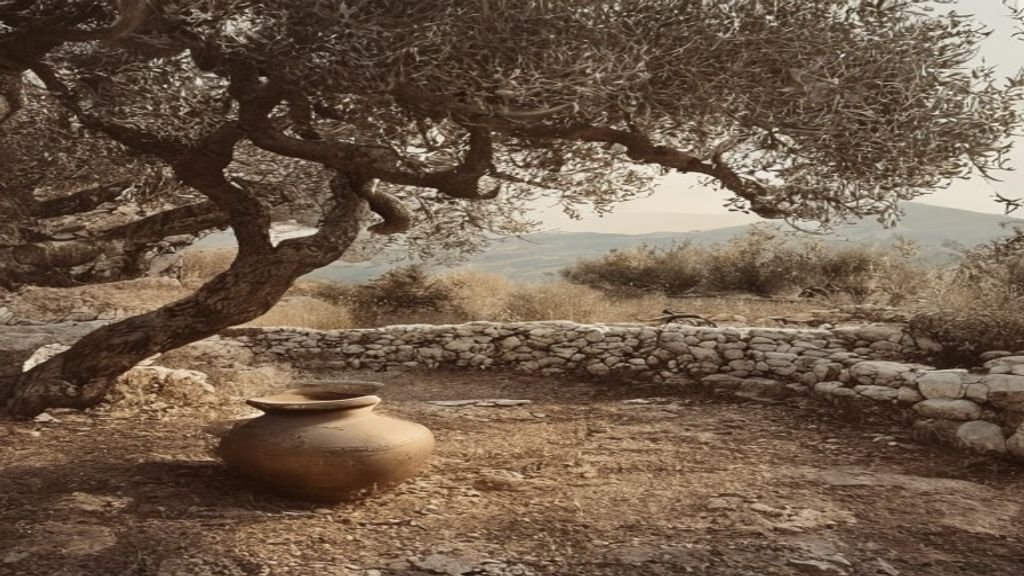
The morning walk is not the most complicated element of the retreat programme. It doesn't require a facilitator with specialist training, expensive equipment, or a carefully designed indoor space. It's 45 minutes, outdoors, starting at 7am.
It is the most consistently mentioned element in end-of-retreat feedback. More than the food, more than the evening sessions, more than the closing circle. This took us a while to understand, and understanding it changed how we think about programme design.
## What the Walk Is
7am departure from the main terrace. 45 minutes. A different route each day depending on conditions, season, and group composition.
The first 20 minutes are silent by invitation — we make clear at the start of the retreat that this is a request, not a rule, and that it doesn't need to be absolute silence. What we're asking for is no conversation. The sounds of the land are not silence: oak trees in light wind, the stream audible from the lower path, cattle somewhere over the ridge, corvids that have learned our schedule and often move ahead of us on the route.
At 20 minutes, at a natural stopping point — usually the granite outcrop above the lower orchard, or the stream crossing at the valley bottom — we pause. People can say something if they want. They almost always do.
The remaining 25 minutes back is ordinary walking with ordinary conversation, which often turns out to be the best conversation of the day.
## The Physiology
Three mechanisms converge in the morning walk, and they're worth understanding because they explain why the order and timing matter.
**Light exposure and circadian rhythm.** Morning light — particularly the broad-spectrum, high-intensity light present in the hour after sunrise — is the primary signal for the circadian clock. Bright outdoor light in the morning suppresses melatonin, advances the sleep phase, and improves the quality of the following night's sleep. Screen-based morning routines delay this signal or replace it with narrow-spectrum artificial light that doesn't carry the same circadian information. A 45-minute outdoor walk within 45 minutes of waking is, from a circadian biology perspective, one of the highest-return morning interventions available. This is not alternative medicine; it is straightforward photobiology.
**The cortisol awakening response.** Cortisol peaks naturally in the 30–45 minutes after waking — this is called the cortisol awakening response (CAR) and represents the body mobilising energy for the day. Light physical activity and outdoor exposure during this window appear to optimise the CAR, producing a sharper morning cortisol peak and a cleaner daytime decline. People who exercise gently outdoors in the morning consistently report better afternoon energy and improved evening wind-down than those who don't. The mechanism is well-understood and the research is consistent.
**Proprioception.** Walking on uneven natural terrain — the paths on our land include roots, rocks, stream crossings, and variable gradient — activates proprioceptive and vestibular systems in ways that flat indoor or pavement walking doesn't. This type of movement engages the cerebellum and motor cortex differently from treadmill or gym exercise. There is growing evidence that this kind of varied, attentive movement has cognitive as well as physical benefits, and that walking barefoot or in minimal footwear on natural surfaces produces additional proprioceptive input. We don't mandate barefoot walking; some guests choose it.
## What Guests Report
The most common report is something we didn't anticipate: guests say the walk changed the rest of their day.
Specifically, they say that having been outside, moving, in relative quiet, before checking their phones — the phone behaviour comes last, and some guests make it the last deliberate part of their morning routine — produces a quality of presence in the rest of the morning that they describe as unusual. Some guests find this difficult to articulate. Several have said it felt like the day had already happened before breakfast, in the sense that they felt oriented and settled rather than reactive.
We've noticed that the guests who skip the walk — most commonly because they didn't sleep well or felt cold — tend to re-enter the group later in the morning with a slightly different quality of attention. They're not worse people. They just seem to take longer to arrive.
Phone behaviour: we ask guests not to bring phones on the walk. Most comply on day one because of social pressure. By day three, most are leaving their phones in their rooms because they don't want them, not because we asked.
## The Routes
Four main options, rotated across a five-night retreat:
The **upper woodland loop**: 2.8km, mostly under chestnut and oak canopy, finishing on the north-facing granite ridge with a view across three valleys.
The **stream path**: 2.2km following the seasonal stream through alder and willow, with multiple crossings on stepping stones.
The **orchard and open ground circuit**: 1.8km through the food forest and orchard terraces, shorter and less demanding, used on first mornings when the group is still finding its feet.
The **long route**: 4km, includes a section of adjacent common land with open heath, reserved for days with confident, fit groups in good weather.
No route takes guests off our land or the adjacent communal footpath network, so there are no traffic or safety considerations beyond reasonable footwear.
---
*The morning walk is part of every retreat we run, and it's the part you can't replicate at home — come and find out why.*