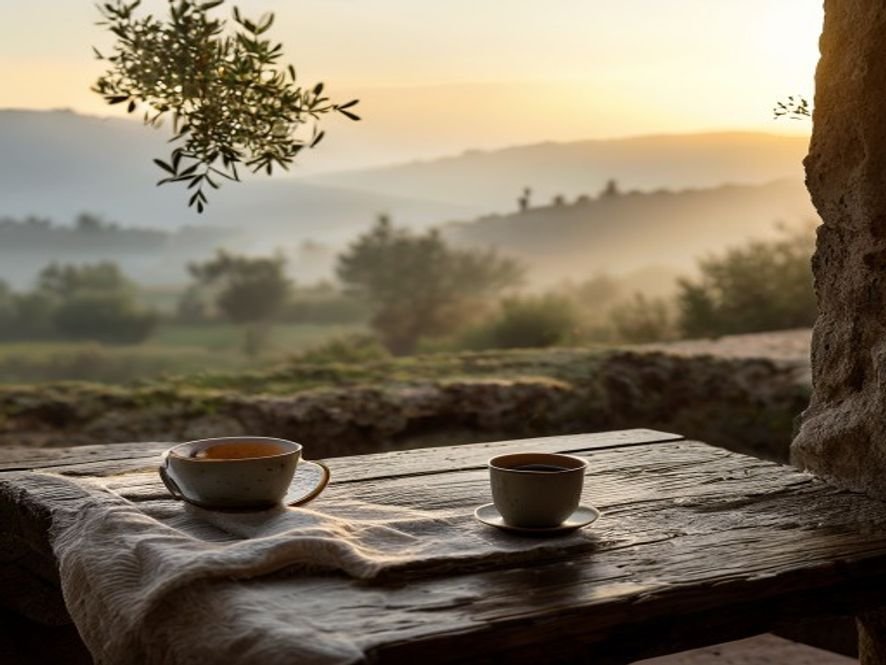
Two years in. We are running, which is not the same as thriving, but it is better than the alternatives we've watched play out for other projects nearby. This article is not a success story — it's an inventory of what we now know that we didn't know when we started, written in the spirit of being useful to people who are considering something similar. There are ten things. They are not ranked by importance. They are all important.
## 1. The Planning System Takes Longer Than Anyone Says
And by "anyone" we mean including your lawyer, your architect, and the municipal official who seemed helpful on the phone. The Portuguese planning system (Regime Jurídico da Urbanização e Edificação — RJUE) is not slow because of malice or incompetence. It is slow because it involves multiple agencies, genuine legal complexity, and a level of documentation that is calibrated for large commercial developers, not small rural restoration projects.
Our initial ARU (Área de Reabilitação Urbana) application took 14 months from submission to approval. We had budgeted six. Build in 18 months from application to permit for any project of moderate complexity. If it comes faster, you'll be pleasantly surprised.
## 2. Water Is Everything, and Groundwater Is Not Guaranteed
We have a borehole. It produces approximately 1,800 litres per hour at 42 metres depth. We are fortunate. A neighbour, 400 metres from us on the same hillside, drilled to 60 metres and found only a marginal flow — adequate for a house, not for a retreat operation with a biological pond and a market garden.
Before buying land in Norte Portugal for any intensive use, commission a hydrogeological assessment. Not a water diviner. An assessment. The cost is roughly €500–800 and it will tell you what the regional aquifer looks like and what your probability of a viable borehole is. We didn't do this — we were lucky. Other people aren't.
## 3. Your First Guests Will Be Your Most Important Marketing Channel
We spent a significant amount of time in our first year thinking about social media, SEO, and print coverage. We should have spent proportionally more time making the first ten bookings exceptional and then staying in contact with those people afterwards.
Our three most reliably productive booking sources, two years in, are direct referral from past guests, a small group of facilitators who bring their own communities, and one well-placed review on a single booking platform. The aggregate spend on marketing activity that produced none of those three was not zero.
## 4. Facilitators Are the Business Model, Not the Accommodation
A facilitator — a yoga teacher, a somatic therapist, a workshop leader, a writing retreat organiser — brings a group of 8 to 12 people who are already committed to the experience and already trust the person leading it. They fill a week's capacity in one booking. They repeat if the experience works. They bring their community with them.
Accommodation-only bookings of individual guests are fine and we welcome them. But the structural economics of a small retreat are far more stable with facilitator partnerships than without them. We wish we had understood this and acted on it 12 months earlier.
## 5. The Shoulder Season Will Test Your Commitment
November to February in Norte Portugal is cold, quiet, and sometimes very beautiful. It is also when bookings are sparse, the building needs attention, and the gap between what you imagined and what is actually in front of you is most visible.
We have spent February evenings questioning the decision. We say this not to discourage but to make it concrete: if your model depends on year-round occupancy, you need a product that works in winter. A sauna, a wood-burning common room, a programme designed for the season rather than against it. We adapted. It took the second winter to get it right.
## 6. You Will Spend More Than You Planned — Add 40%
Add 40% to your construction and fit-out budget. This is not a metaphor. We have spoken to six people running comparable projects in Portugal and the range was 30% over budget to 60% over budget, with an average somewhere around 40. The reasons are not unusual: unexpected structural findings in old buildings, material cost increases, planning revisions that required redesign, the general property of complex projects to generate unanticipated requirements.
Underbudgeting is the most consistent failure mode we've observed in projects like this. It produces mid-project crises that damage both the build quality and the operators' personal finances.
## 7. You Will Love This Land in a Way You Didn't Expect
This is harder to articulate than the practical points above, but it belongs here because it is real and it changes the calculation.
Two years of working a piece of land — planting, maintaining, observing the seasons, knowing which corner floods in February and which slope dries first in July — produces a relationship with a place that is qualitatively different from anything we had anticipated. You learn to read the land. You start caring about things that would have seemed abstract before: the health of a particular oak, whether the kestrels came back to the old granite wall, what the soil under the chestnut grove smells like after rain. This is not a product. It is what happens to you when you stay somewhere long enough.
## 8. The Community Matters More Than Any Marketing Campaign
Our neighbours know we're here. One lent us a post-hole digger. Another told us about a stonemason. Another brought us a bag of quince in October with no particular reason given. A woman in the village who was initially sceptical of the whole project stopped us on the road six months ago and said our guests seemed respectful. That is, by any measure, a more important piece of feedback than our aggregate online review score.
Rural communities in Norte have seen foreigners arrive with projects before. Some of those projects failed. Some extracted value and left. Being a good neighbour — showing up, participating in village life where invited, not making the land about yourself — is not supplementary to running a retreat here. It is foundational.
## 9. Rest Is Not a Luxury — It Is an Operational Necessity
We pushed too hard in the first year. The retreat ran and our personal capacity deteriorated. By the third quarter of year one we were making worse decisions, communicating poorly, and not doing the work with the quality it required.
This is a known failure mode in small hospitality operations and we fell into it anyway. If you are the product — if your presence, attention, and care are what guests are actually paying for — then depleting those resources is not just bad for you, it is bad for the business. The non-negotiable rest periods we now protect were not there initially. They are there now.
## 10. It's Worth It
This is not an advertisement. We mean it as a factual statement.
A project like this is difficult in ways that are not visible from outside: the bureaucracy, the physical work, the financial risk, the personal cost of living at the edge of your competence for extended periods. We have described all of that honestly in this article and in others on this blog.
And it is worth it. Not because of the reviews or the bookings or the brand we're building, though those things matter. Because we are doing something real with a piece of land that was neglected, in a community that we've been welcomed into, creating an experience for people that is occasionally genuinely meaningful. That combination — real work, real place, real consequence — is not easy to find.
---
This kind of project is not for everyone. It requires capital, patience, physical and psychological resilience, and a genuine relationship with uncertainty. But for the person who fits those requirements and wants to build something rooted in a specific piece of land and a specific community — there is nothing quite like it. That's the only way we know how to end this.
---
*We document everything here — the failures as well as the progress. If you're considering a similar project and want to talk through the specifics, the contact page is open.*